Customs Clearance in Egypt 2026: The Complete Importer’s Guide
Customs clearance in Egypt is an essential part of importing commercial goods into the country. The process involves preparing shipment

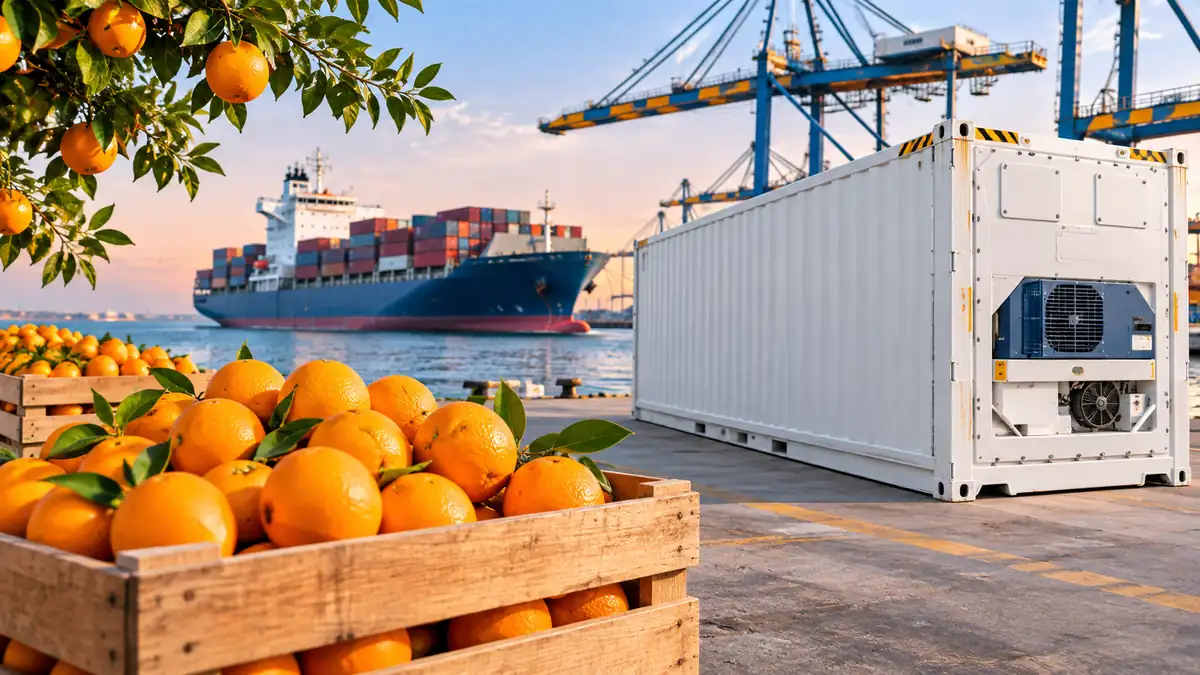
is an important part of the country’s agricultural trade, with Egyptian citrus reaching international markets through established export and logistics networks.
However, preparing oranges for export involves more than harvesting and packing. Selecting the right shipping method, maintaining suitable transport conditions, preparing export documents, and coordinating with a reliable freight forwarder are essential parts of the process.
In this guide, Beta Cargo Cairo explains how to prepare fresh oranges for international sea freight using full-load refrigerated containers.
According to official agricultural quarantine figures published by Egypt’s State Information Service in January 2026, Egypt exported approximately 9.5 million tonnes of agricultural products in 2025.
Citrus fruits led the country’s agricultural exports, reaching approximately 2 million tonnes.
These figures highlight the importance of the Egyptian citrus industry and the growing need for efficient international logistics solutions for agricultural exporters.
Source: Egypt State Information Service – Agricultural Export Statistics 2025.
Sea freight is a practical option for transporting large commercial shipments of fresh oranges to international destinations.
Refrigerated shipping containers, commonly known as reefers, provide controlled transport conditions that help maintain product quality throughout the journey.
Key benefits include:
The suitability of sea freight depends on the destination, transit time, cargo condition, and the buyer’s requirements.
A reefer container is a refrigerated shipping container equipped with a temperature-control system designed to maintain suitable conditions for sensitive cargo.
Reefer containers are widely used to transport fresh fruits, vegetables, and other temperature-sensitive products.
For orange exporters, refrigerated containers help maintain the required transport temperature when the cargo has been properly prepared and pre-cooled.
A reefer container should not be treated as a replacement for proper pre-cooling at the packing facility.
| Feature | Reefer Container | Dry Container |
|---|---|---|
| Temperature control | Active refrigeration | No active refrigeration |
| Suitable cargo | Fresh produce and temperature-sensitive goods | General dry cargo |
| Ventilation | Adjustable according to cargo requirements | Limited ventilation |
| Shipping cost | Includes refrigeration-related requirements | Generally lower for comparable transport |
The appropriate transport temperature depends on the orange variety, maturity, production area, journey duration, and destination requirements.
According to the University of California, Davis, the optimum storage temperature for many orange varieties ranges from 3°C to 8°C. However, specific varieties and growing conditions may require different settings.
This range should not be applied automatically to every shipment.
Before loading, exporters should confirm:
Source: UC Davis – Orange Postharvest Recommendations.

Identify the importing country and review its agricultural import requirements before preparing the shipment.
Different markets may have specific rules regarding plant health, inspections, traceability, packaging, and cold treatment.
Choose oranges that meet the buyer’s agreed specifications for variety, size, maturity, appearance, and quality.
Damaged or deteriorating fruit should be removed during the sorting process.
Oranges should be sorted, graded, and packed using suitable packaging materials.
Cartons must be strong enough for transport and arranged to support airflow throughout the refrigerated container.
Review the commercial invoice, packing list, phytosanitary certificate, and any additional documentation required by the importing country.
Complete the applicable agricultural inspection and export formalities before the scheduled departure.
Full Container Load (FCL) shipping allows exporters to use a dedicated container for their shipment.
Provide your freight forwarder with the cargo weight, carton or pallet count, destination, temperature requirements, and cargo readiness date.
The appropriate container size should be selected according to the shipment’s actual volume and weight.
Fresh oranges should be prepared to the agreed transport temperature before loading.
Correct loading practices are essential to support air circulation, maintain temperature distribution, and avoid obstructing the refrigeration system.
Exporters should also follow the container’s loading limits and the carrier’s cargo-handling instructions.
For additional guidance, refer to Hapag-Lloyd’s Reefer Cargo Handling Recommendations.
Once loading and export formalities are complete, the container is transported to the port for shipment.
The freight forwarder coordinates the agreed transportation services, shipping documentation, and shipment updates according to the selected service scope.
The exact documentation depends on the destination country and the applicable export requirements.
Common documents include:
Exporters should verify the relevant requirements before booking transportation.
Official resources: Egypt Trade Information Portal and Nafeza.
There is no single fixed shipping price for all orange exports.
Refrigerated sea freight costs depend on several factors, including:
Providing accurate shipment details helps your freight forwarder prepare a more relevant quotation.
Full Container Load shipping is suitable for exporters with large commercial orders that require dedicated refrigerated transportation.
A full reefer container allows the exporter to organize the shipment according to the agreed cargo specifications and transport requirements.
The choice between a 20-foot or 40-foot reefer depends on the cargo volume, packaging dimensions, payload limits, and equipment availability.
Before booking, review the actual container specifications and loading plan.
Beta Cargo Cairo provides international sea freight and logistics solutions for businesses and exporters.
If you are planning an orange export from Egypt, our team can discuss your refrigerated shipping requirements and help coordinate suitable full-container sea freight options based on your destination and shipment details.
Explore our international shipping and logistics services.
Yes. Refrigerated sea freight is widely used for commercial shipments of fresh oranges, provided the cargo is properly prepared and transported under suitable conditions.
The capacity depends on the container type, maximum permitted payload, carton dimensions, pallet configuration, and loading requirements.
The appropriate temperature depends on the orange variety and shipment conditions. Many varieties have recommended storage temperatures between 3°C and 8°C, but the final transport settings must be confirmed for each shipment.
Transit times depend on the destination port, shipping route, vessel schedule, and any transshipment requirements.
Contact our team to discuss your cargo specifications, destination, required shipping date, and available FCL reefer shipping options.
Is your orange shipment ready for export?
Plan your refrigerated sea freight before your cargo is ready to move.
Send Beta Cargo Cairo the following details:
Contact Beta Cargo Cairo today to request a full-container refrigerated sea freight quotation.
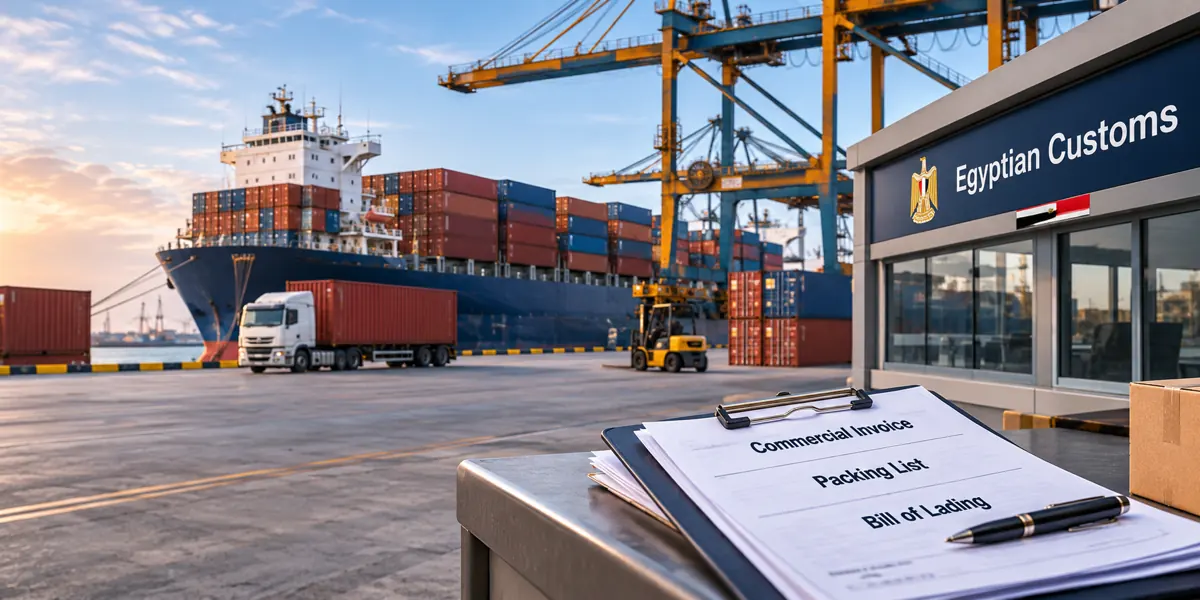
Customs clearance in Egypt is an essential part of importing commercial goods into the country. The process involves preparing shipment

Shipping from Egypt to Morocco Shipping goods from Egypt to Morocco offers businesses an opportunity to access new markets, connect

Sea Freight vs Air Freight Choosing between sea freight and air freight is an important decision for businesses involved in

