Shipping from Egypt to Morocco: Complete Guide to Sea Freight, LCL and FCL
Shipping from Egypt to Morocco Shipping goods from Egypt to Morocco offers businesses an opportunity to access new markets, connect

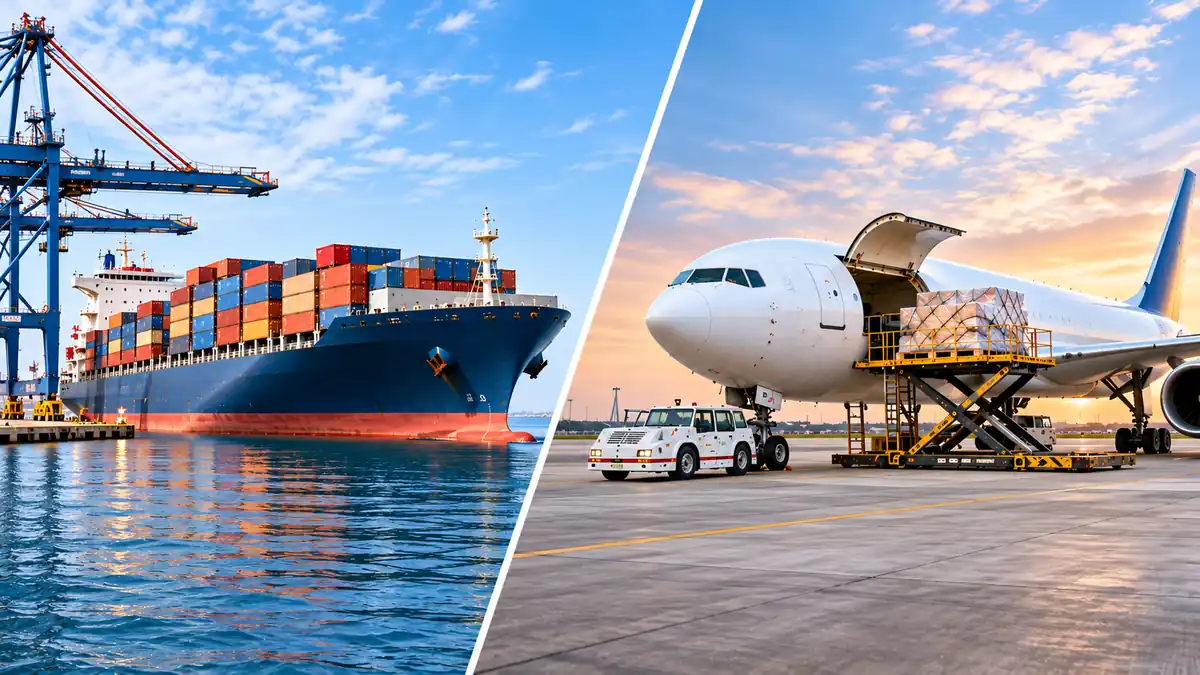
Choosing between sea freight and air freight is an important decision for businesses involved in international trade. The shipping method you select can affect transportation costs, delivery schedules, inventory management, and overall supply chain efficiency.
Sea freight is generally suitable for large shipments and businesses looking to manage transportation costs, while air freight is often preferred when speed is a priority.
However, the best option depends on several factors, including cargo volume, weight, destination, delivery deadlines, and additional logistics expenses.
In this guide, we explain the differences between sea freight and air freight, compare their costs and transit times, and help you determine which option is right for your business.
Sea freight is the transportation of goods between countries by cargo ship. It is widely used in international trade because ships can carry large volumes of commercial goods, industrial materials, machinery, and other types of cargo.
Businesses commonly choose sea freight when shipments are too large for economical air transportation or when delivery deadlines allow for longer transit times.
Sea freight generally includes several shipping options.
Full Container Load (FCL)
FCL shipping means that a shipper uses an entire container for their cargo. It is suitable for businesses shipping large quantities of goods or requiring dedicated container space.
Low Container Load (LCL)
LCL shipping allows multiple shippers to share container space. It can be a practical option for smaller shipments that do not require a full container, subject to route availability and cargo requirements.
Bulk and General Cargo
Some goods are transported as bulk cargo or general cargo, depending on their characteristics, packaging, dimensions, and handling requirements.
You can explore Beta Cargo’s sea freight services to learn more about available shipping options.
Sea freight offers several advantages for international shipping:
Sea freight also has limitations that businesses should consider:
For businesses that need goods urgently, these factors may make air freight a more appropriate option.
Air freight is the transportation of cargo by aircraft. It is commonly used by businesses that need to move goods quickly across international markets.
Air freight is often suitable for urgent shipments, high-value products, lightweight goods, and cargo with strict delivery deadlines.
The UPS Air Freight Shipping Guide provides further information about air freight applications and shipping considerations.
Air freight offers several important benefits:
Despite its speed, air freight has several limitations:
For these reasons, businesses should compare the total shipping cost with the commercial value of receiving goods sooner.
The following table summarizes the main differences between sea freight and air freight.
| Comparison Factor | Sea Freight | Air Freight |
|---|---|---|
| Transportation speed | Generally slower | Generally faster |
| Cost per unit | Usually lower for large shipments | Usually higher |
| Cargo capacity | Suitable for large and heavy shipments | More constrained by aircraft capacity and cargo dimensions |
| Best suited for | Large commercial shipments and planned inventory | Urgent, high-value, or time-sensitive shipments |
| Shipment size | FCL, LCL, bulk, and general cargo options | Often suitable for smaller or time-sensitive cargo |
| Handling requirements | Port handling and container operations | Airport handling and aviation security procedures |
| Main cost considerations | Container or cargo volume, route, port charges, and handling | Chargeable weight, route, handling, and applicable surcharges |
| Main scheduling considerations | Vessel schedules and port operations | Flight schedules and available cargo capacity |
Important: Actual costs and transit times depend on the origin, destination, carrier, shipment characteristics, and service level. Always request a route-specific quotation before making a decision.
Sea freight is generally the more economical choice for large shipments, especially when the cargo can fill a container or when the shipment is not time-sensitive.
Air freight typically costs more per kilogram, but it can offer commercial benefits when speed is important.
For example, a manufacturer waiting for an essential component may face production delays if the shipment arrives late. In such a situation, paying more for air freight could be justified if it helps avoid greater business losses.
On the other hand, a company importing a large quantity of packaging materials for future use may benefit from sea freight because the goods can be shipped in advance.
Several factors influence the cost of both sea freight and air freight.
1. Cargo Weight and Volume
Shipment dimensions and weight affect pricing. Air freight may use chargeable weight, which considers actual weight and volumetric weight according to the carrier’s rules.
Sea freight charges depend on the shipping arrangement, container requirements, cargo volume, and applicable route charges.
2. Shipping Route
The origin, destination, available services, and transportation distance all influence the quotation.
3. Cargo Type
Some goods require special packaging, temperature control, additional security, or specific handling arrangements.
4. Customs and Handling Charges
Customs clearance, terminal handling, storage, inland transportation, and other applicable fees may increase the total cost.
5. Delivery Requirements
Urgent delivery requirements or specialized service levels can affect the final quotation.
To make an informed decision, compare the complete cost of each option rather than the base freight rate alone.
Transit time is another major factor when selecting a shipping method.
Air freight is generally faster because aircraft can cover long distances in a shorter period than cargo ships.
Sea freight usually takes longer because shipments depend on vessel schedules, port operations, loading and unloading, and the transportation route.
However, there is no single transit time that applies to every shipment.
Sea freight transit time depends on the origin and destination ports, vessel schedules, direct or transshipment routes, port congestion, and customs procedures.
Additional time may be required for cargo collection, export clearance, container loading, destination handling, and final delivery.
Air freight transit time depends on flight availability, routing, direct or connecting flights, cargo acceptance procedures, and customs clearance.
Although the flight itself may be relatively short, the complete shipping process also includes collection, airport handling, documentation, customs procedures, and final delivery where applicable.
Best practice: Ask your freight forwarder for an estimated end-to-end transit time, not just the vessel journey or flight duration.
Sea freight may be the better option when:
For example, a business importing furniture, textiles, construction materials, or industrial equipment may find sea freight suitable, depending on the cargo specifications and destination.
Air freight may be more suitable when:
Some perishable or temperature-sensitive products may also require air transportation, but the correct method depends on their specific handling requirements and the availability of appropriate facilities.
Before selecting sea freight or air freight, consider the following questions.
Determine the latest acceptable delivery date. If your business can accommodate a longer transit time, sea freight may be worth considering. If a delay would create significant losses, air freight may be the better option.
Calculate the cargo’s total weight and dimensions. This information helps your freight forwarder evaluate the available options and prepare a more accurate quotation.
Compare freight charges with other costs, including customs clearance, handling, storage, inland delivery, and any applicable insurance.
Check whether your goods require special packaging, temperature control, security measures, or additional documentation.
Different routes offer different carrier schedules, transit times, and pricing structures. The most suitable method for one destination may not be the best choice for another.
Consider inventory holding costs, production schedules, customer commitments, and the financial consequences of late delivery.
The best shipping decision balances transportation cost, speed, cargo requirements, and the overall needs of your supply chain.
Choosing between sea freight and air freight requires an understanding of your cargo, delivery schedule, destination, and budget.
Beta Cargo provides international logistics solutions, including sea freight, air freight, customs clearance, warehousing, distribution, and project logistics.
Our team can assess your shipment requirements and help you explore suitable transportation options based on cargo specifications and route availability.
Explore our services:
To discuss your shipment, visit our Contact Page and share your cargo details, origin, destination, weight, dimensions, and required delivery date.
Sea freight and air freight each offer different advantages.
Sea freight is generally a strong choice for large shipments, heavy cargo, and businesses prioritizing transportation cost. Air freight is often preferable when delivery speed is essential or when the commercial value of receiving goods sooner justifies the additional expense.
Before making a decision, compare the total logistics cost, estimated end-to-end transit time, cargo requirements, and destination-specific conditions.
Need help choosing the right shipping method?
Contact Beta Cargo to discuss your shipment and request a quotation based on your cargo, destination, and delivery requirements.

Shipping from Egypt to Morocco Shipping goods from Egypt to Morocco offers businesses an opportunity to access new markets, connect

Egypt is an important gateway for international trade, connecting businesses with markets across the Middle East, Africa, Europe, Asia, and
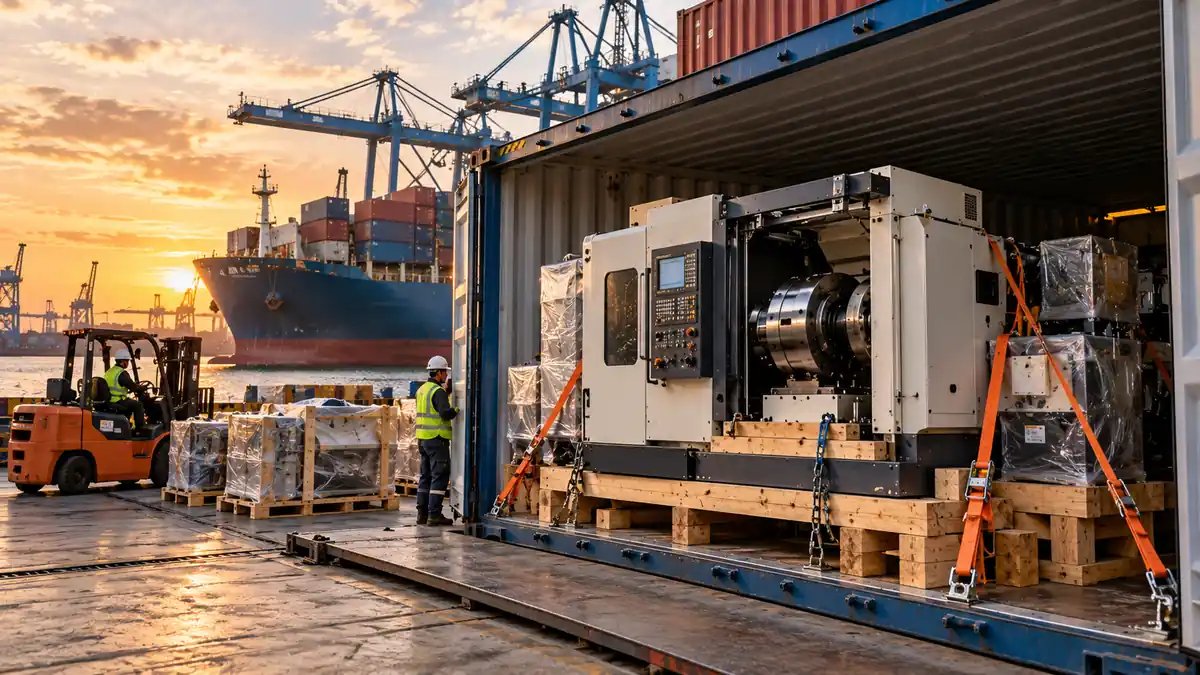
Industrial Machinery Shipping from Turkey to Egypt Industrial machinery shipping from Turkey to Egypt is rarely a simple container booking.

