Shipping from Egypt to Morocco: Complete Guide to Sea Freight, LCL and FCL
Shipping from Egypt to Morocco Shipping goods from Egypt to Morocco offers businesses an opportunity to access new markets, connect


Egypt is an important gateway for international trade, connecting businesses with markets across the Middle East, Africa, Europe, Asia, and other regions. Whether you are an exporter shipping Egyptian products abroad, a manufacturer sending industrial equipment, or a business looking for reliable cargo transportation, understanding worldwide shipping from Egypt can help you plan your shipments more effectively.
International shipping involves more than moving goods from one country to another. It requires selecting the appropriate transportation method, preparing the necessary documents, understanding customs requirements, and coordinating the shipment from origin to destination.
In this guide, we explain the main international shipping methods available from Egypt, how the shipping process works, which documents may be required, what affects shipping costs, and how to choose a suitable logistics provider.
Worldwide shipping from Egypt refers to transporting goods from Egypt to international destinations through suitable transportation networks and logistics services.
The most appropriate shipping solution depends on several factors, including the destination country, cargo dimensions, total weight, shipment urgency, product type, and applicable customs regulations.
Businesses may use international shipping to transport products such as:
Each shipment has different requirements. For this reason, exporters should evaluate their cargo and destination before selecting a shipping method.
International shipping supports businesses of different sizes and across various industries.
Egyptian manufacturers and exporters may need international transportation to deliver products to overseas buyers, distributors, wholesalers, and retailers.
A suitable shipping plan helps businesses coordinate cargo preparation, transportation, documentation, and delivery requirements.
International buyers may arrange shipments from Egyptian suppliers to their own warehouses or distribution facilities. Depending on the transaction, the buyer or seller may be responsible for booking transportation and managing specific shipping arrangements.
Trading companies often transport products between Egypt and international markets. Their shipping requirements may range from occasional small consignments to regular commercial shipments.
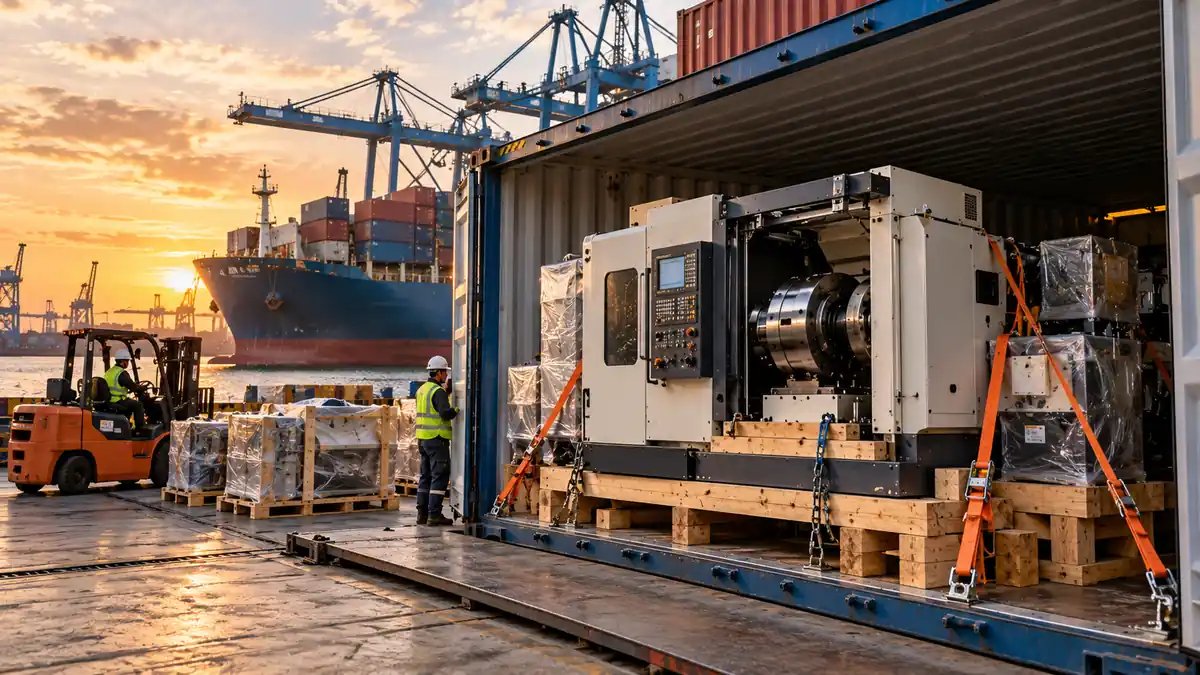
Companies transporting machinery, equipment, or project materials may require specialized handling, suitable loading arrangements, and careful coordination between suppliers, transport providers, and destination facilities.
Choosing the right transportation method is one of the most important decisions in international logistics.
The main options include sea freight, air freight, and land freight for destinations that can be served through appropriate road transportation routes.
Sea freight is commonly used for international cargo, especially commercial shipments with substantial weight or volume.
Depending on the shipment and available services, businesses may choose between full-container shipping and shared-container arrangements.
Full Container Load (FCL)
FCL is an option when a shipment uses an entire shipping container. It may be suitable for large consignments, regular exports, or cargo that requires a dedicated container.
Low Container Load (LCL)
LCL allows cargo to share container space with shipments belonging to other customers. It can be useful when the shipment does not require a full container, subject to route availability and cargo compatibility.
Advantages of Sea Freight
Considerations
Sea freight usually requires more transit time than air freight. Port handling, customs procedures, transshipment, and inland transportation may also affect the total delivery schedule.
Explore our [Sea Freight Services] page to learn more about available shipping solutions.
Air freight is often considered when speed is a priority or when the cargo is valuable, time-sensitive, or suitable for air transportation.
The final cost generally depends on the shipment’s chargeable weight, dimensions, destination, service level, and any applicable surcharges.
Advantages of Air Freight
Considerations
Air freight is often more expensive per unit of weight than sea freight. Cargo size restrictions, airline acceptance rules, security requirements, and destination regulations must also be considered.
Some products require special approval or cannot be transported by air.
Learn more through our [Air Freight Services] page.
Land freight can be suitable for destinations accessible through established road transportation routes and operationally available cross-border services.
It may support regional trade and certain international cargo movements where road transport is practical.
Advantages of Land Freight
Considerations
Route availability, border procedures, transit permissions, cargo restrictions, and the security situation can affect feasibility and delivery schedules.
Always confirm that the destination and route are currently served before planning a land shipment.
The following table provides a general comparison of the main transportation methods.
| Factor | Sea Freight | Air Freight | Land Freight |
|---|---|---|---|
| Transportation speed | Generally slower | Generally faster | Depends on route |
| Typical cargo | Large, heavy, or high-volume shipments | Urgent or time-sensitive cargo | Regional and road-accessible destinations |
| Cost considerations | Often attractive for high-volume cargo | Often higher per unit of weight | Depends on distance, route, and cargo |
| Capacity | Multiple container and cargo options | Subject to aircraft capacity and restrictions | Depends on vehicle and route |
| Route availability | Depends on ports and shipping services | Depends on airports and airline networks | Depends on road access and border arrangements |
| Best choice | When volume and cost efficiency matter | When speed is a priority | When a suitable road route is available |
The best option depends on your specific shipment. Compare the total logistics cost, expected transit time, cargo requirements, and delivery arrangements rather than choosing based on transportation price alone.
Although the details vary by shipment, international cargo transportation generally follows several key steps.
Prepare the basic information about your cargo, including:
Accurate shipment details help the logistics provider assess suitable transportation options and prepare a more reliable quotation.
Compare sea freight, air freight, or land freight where available.
For example, a large commercial shipment may be suitable for sea freight, while an urgent consignment may justify considering air freight.
The decision should account for cargo characteristics, destination requirements, budget, and timing.
A shipping quotation may include several cost components, depending on the agreed service scope.
Ask whether the quotation covers:
Confirm which services are included and which costs remain the responsibility of the shipper or consignee.
Ensure the cargo is packaged appropriately for its characteristics and transportation method.
Labels, package counts, weights, and cargo descriptions should match the shipping documents. Incorrect or incomplete information may result in additional checks or delays.
Some products require permits, inspection certificates, or specialized packaging.
Once the booking and required preparations are confirmed, the shipment can proceed according to the agreed arrangements.
Depending on the service, this may involve factory pickup, warehouse handling, container loading, delivery to a port or airport, and international transportation.
Shipments must comply with applicable export rules in Egypt and import requirements in the destination country.
The required procedures vary according to the product, destination, shipment type, and parties involved.
Shipment updates depend on the carrier and service used.
The logistics provider and relevant parties should coordinate any documentation requests, destination handling, customs release, and final delivery arrangements.
For information about customs procedures and export requirements, visit the official Egyptian Customs Authority website.
Preparing the correct documents is essential for international cargo transportation. The exact requirements depend on the product, destination, transport method, and applicable regulations.
Common shipping documents may include the following.
The commercial invoice identifies the seller, buyer, goods, quantities, values, and other relevant transaction details.
The description and declared value should accurately represent the shipment.
A packing list provides details about the shipment’s packaging, including package counts, weights, dimensions, and contents where applicable.
It helps logistics providers and customs authorities understand how the cargo is prepared.
The transport document depends on the shipping method.
These documents record key shipment and transportation details.
A Certificate of Origin identifies the country of origin of the goods when required.
It may be relevant to customs procedures, trade agreements, or preferential tariff treatment, depending on the destination and product.
Certain shipments may require additional documents, such as:
Not every shipment requires all these documents. Confirm the current requirements with the relevant authorities and your logistics provider before dispatch.
International shipping costs vary from one shipment to another. Several factors influence the final quotation.
The destination country, available shipping services, routing, and required transfers can affect transportation costs.
A direct route may have a different cost and transit time from a route involving transshipment or additional handling.
Shipping providers assess cargo according to the pricing method applicable to the service.
For air freight, chargeable weight commonly reflects the greater of actual gross weight and volumetric weight, subject to the carrier’s calculation rules.
For sea freight, charges may depend on container type, container utilization, shipment volume, weight, and the applicable rate structure.
Sea freight, air freight, and land freight have different pricing structures.
The most economical method depends on the cargo, route, shipment size, and delivery requirements.
Fragile, oversized, hazardous, temperature-sensitive, or regulated goods may require special equipment, handling, packaging, documentation, or approvals.
These requirements can increase the total logistics cost.
Import duties, taxes, and other government charges depend on the destination country’s regulations, the goods’ classification, declared customs value, origin, and applicable trade agreements.
These amounts are not necessarily included in the international transportation quotation.
Pickup, warehousing, terminal handling, customs brokerage, insurance, and final-mile delivery may affect the total cost.
Clarify the agreed scope of service to avoid unexpected charges.
Freight rates and available capacity can change according to market demand, carrier schedules, route disruptions, and other operational conditions.
Requesting a quotation with accurate shipment details helps you compare available options.
Choosing a suitable logistics provider can help businesses coordinate transportation, documentation, and delivery requirements.
Consider the following factors before making a decision.
Confirm that the provider can arrange transportation to your destination and handle the type of cargo you intend to ship.
Ask about available sea freight, air freight, land freight, and any required connections.
Do not compare only the headline freight rate.
Review included services, excluded charges, customs-related responsibilities, handling fees, and delivery arrangements.
A suitable provider should be able to explain the shipping documents required for your cargo and identify issues that need confirmation before dispatch.
Product-specific regulations should always be verified with the relevant authorities.
Ask for the estimated transit time and clarify whether it refers to transportation alone or the full process from pickup to final delivery.
Transit estimates may change due to customs inspections, weather, congestion, carrier schedules, or other operational factors.
Clear communication helps businesses respond to documentation requests and coordinate with suppliers, customers, and receiving facilities.
Before booking, ask how shipment updates will be provided and who will handle operational questions.
Determine whether customs brokerage is included, who is responsible for import formalities, and which charges must be paid separately.
Customs clearance arrangements vary by destination and shipment type.
International shipping requires coordination between cargo preparation, transportation, documentation, and destination arrangements.
Beta Cargo supports businesses looking for logistics solutions from Egypt, with services that include sea freight, air freight, customs clearance, storage, distribution, and project logistics, subject to service and route availability.
When planning your shipment, sharing accurate cargo details helps the team assess suitable options and clarify the next steps.
To discuss your requirements, prepare the following information:
You can then request a quotation based on your actual shipment requirements.
Whether you are exporting commercial goods, transporting industrial equipment, or planning an international cargo shipment, choosing the right logistics solution starts with understanding your requirements.
Contact Beta Cargo to discuss your shipment, explore available transportation options, and request a quotation based on your cargo and destination.
Request an International Shipping Quote Today!

Shipping from Egypt to Morocco Shipping goods from Egypt to Morocco offers businesses an opportunity to access new markets, connect

Sea Freight vs Air Freight Choosing between sea freight and air freight is an important decision for businesses involved in
Industrial Machinery Shipping from Turkey to Egypt Industrial machinery shipping from Turkey to Egypt is rarely a simple container booking.

