Shipping from Egypt to Morocco: Complete Guide to Sea Freight, LCL and FCL
Shipping from Egypt to Morocco Shipping goods from Egypt to Morocco offers businesses an opportunity to access new markets, connect

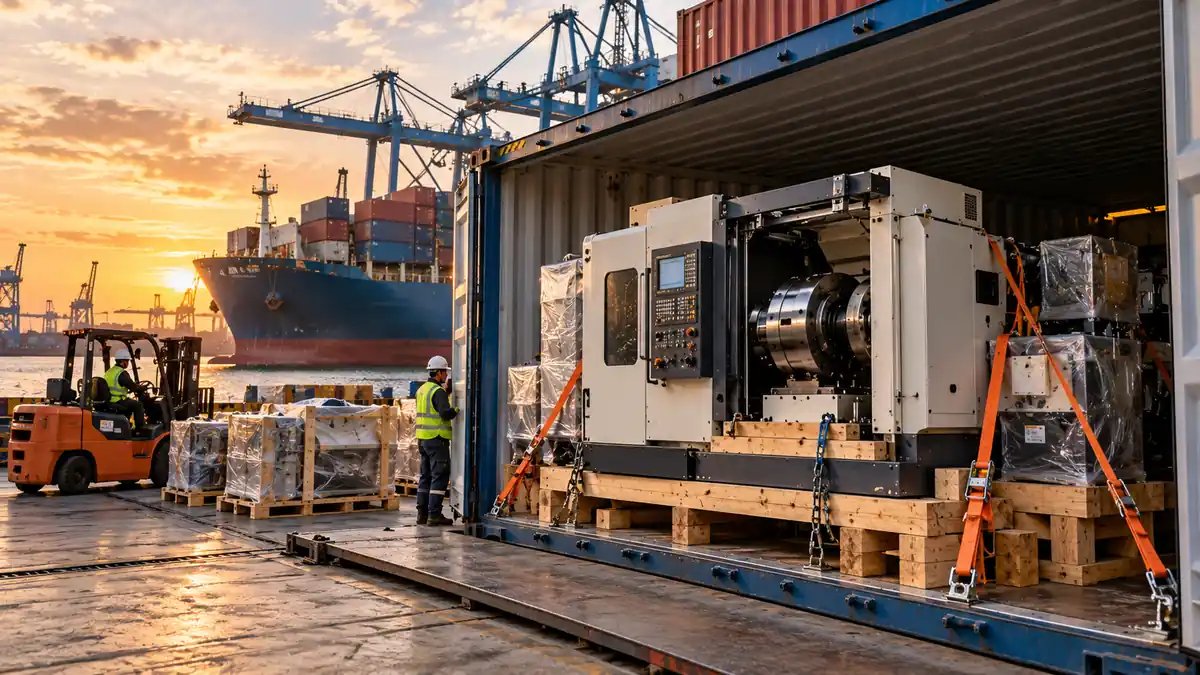
Industrial machinery shipping from Turkey to Egypt is rarely a simple container booking. A CNC machine, a packaging line and a full set of factory equipment each raise different questions about size, weight, packing, documents and customs. This guide explains the main points so you can plan with fewer surprises.
Turkish industrial interest in Egypt has been growing. The Suez Canal Economic Zone (SCZone) reported 18 Turkish companies operating in the zone, and 2026 press reports describe new Turkish projects such as a $16.5 million garment factory and a $14 million kitchen sink plant.
It helps to be precise about what this means for shipping:
The sources we reviewed describe new projects and expansions. They do not show that Turkish factories are moving to Egypt in general. Your own project may be either type, or a mix, so confirm which applies before you plan the shipment.
Machinery cargo varies widely. Common categories include:
Each item has its own weight, centre of gravity and handling needs. A compact machine may fit inside a standard container. A large press or a long line section may not.
A production line is not one shipment. It is often many machines, conveyors, control cabinets, tools and spare parts that must arrive in a workable order.
Good planning usually covers:
Dismantling, installation and reassembly are not automatically part of a freight quote. Treat them as separate services. Confirm in writing who dismantles, who supervises, who reassembles and who is responsible for insurance at each stage.
For most machinery moving from Turkey to Egypt, sea freight is the main option because of the weight and size involved. Air freight can suit small, urgent or high-value items, such as spare parts, control units or precision components. Beta Cargo offers both sea freight and air freight.
The right choice depends on cargo size, weight, urgency, budget and what the receiving site needs first.
The correct option depends on the machinery’s dimensions, weight, cargo characteristics and carrier availability. It cannot be decided from the machine type alone.
You use a whole container. This suits larger machines, several crated items or valuable cargo you prefer not to share space with. Check the container’s internal size and weight limit against your packed cargo. See Beta Cargo’s guide to shipping container sizes.
Your cargo shares a container with other shippers. It may suit small machines, parts or tooling. Handling is more frequent, and availability depends on the route.
Some machinery does not fit a standard container. Options that carriers may offer include:
Availability, equipment type and handling conditions vary by carrier and sailing. They must be confirmed for your specific cargo before you commit to a plan.
There is no fixed price for machinery shipping, so costs should be quoted against your cargo details. The main drivers are:
Send full dimensions, weights and photos when you ask for a quote. It avoids revised quotes later.
Egypt’s customs process runs largely through Nafeza, the National Single Window for Foreign Trade. Nafeza launched in April 2021, according to the U.S. International Trade Administration. Its guidance says the importer enters shipment data, the Egyptian Customs Authority issues an Advance Cargo Information (ACI) number, called an ACID, and the foreign exporter must show that number on the shipping documents. Importers can use a customs broker or other authorised agent to work in the system.
Exact requirements depend on the goods. Typical items include:
The General Organization for Export and Import Control (GOEIC) runs inspection and conformity programmes for listed products. The WTO’s Trade Policy Review of Egypt notes that some goods need pre-shipment inspection by GOEIC-registered, accredited firms. Whether your machinery falls under a conformity requirement depends on its type and tariff classification. Check this before you ship.
This guide gives no duty or tax rates, because they depend on the tariff classification, the importer’s status and the applicable regime. Some project machinery can qualify for special customs treatment, such as reduced rates and temporary regimes under the 2020 Customs Law and its 2021 regulations. VAT treatment of factory machinery has also changed recently. Law No. 149 of 2026 is reported to suspend VAT on machinery for industrial production against proof of use. Confirm the current position with your customs adviser or the Egyptian Tax Authority before budgeting.
Not every type of used machinery can be imported into Egypt. The WTO review notes that Ministerial Decree 770/2005 lists goods that may be imported used and the conditions that apply. Do not buy or ship used equipment until you have checked:
Get written confirmation from a customs specialist before you pay the seller.
Beta Cargo is a Cairo-based freight forwarder. For machinery shipments from Turkey, the services shown on its website that are relevant include:
Because every machine is different, the team reviews your cargo details first, then proposes a shipping plan and quotation. Services such as dismantling, installation, reassembly, special heavy-lift equipment or inland oversize transport are not assumed. They should be confirmed in writing for your project.
Often yes, if the packed cargo fits the container’s internal size and weight limit. Larger or heavier items may need a flat-rack, open-top or other special arrangement. Carrier availability affects this.
FCL means the whole container is yours. LCL means your cargo shares a container with other shippers. FCL usually suits larger or more valuable machinery. LCL may suit small items and parts.
It depends on the route, carrier schedule, packing readiness, special equipment and customs clearance. Ask for an estimate based on your cargo and the current schedules. Treat it as an estimate, not a guarantee.
Only some used machinery is allowed, and conditions apply. Check eligibility and documentation before you buy or ship. Egypt’s rules sit in decrees and customs practice, so confirm with a customs specialist.
Not unless it is stated clearly in the quote. Dismantling, installation and reassembly are usually separate services. Confirm them in writing.
Typically a commercial invoice, packing list, transport document, importer registration documents and Nafeza/ACID registration, plus any technical, origin, inspection or licence documents your goods require.
There is clear evidence of new Turkish factory investments and expansions in Egypt. That is different from existing factories relocating. Some companies may move lines, but you should plan around your own project facts.
Planning to ship industrial machinery from Turkey to Egypt? Contact Beta Cargo to discuss your cargo requirements and request a customized shipping quotation.

Shipping from Egypt to Morocco Shipping goods from Egypt to Morocco offers businesses an opportunity to access new markets, connect

Sea Freight vs Air Freight Choosing between sea freight and air freight is an important decision for businesses involved in

Egypt is an important gateway for international trade, connecting businesses with markets across the Middle East, Africa, Europe, Asia, and

