Sea Freight
Sea Freight Services Beta Cargo provides sea freight solutions for businesses shipping goods internationally. We support Full Container Load (FCL),

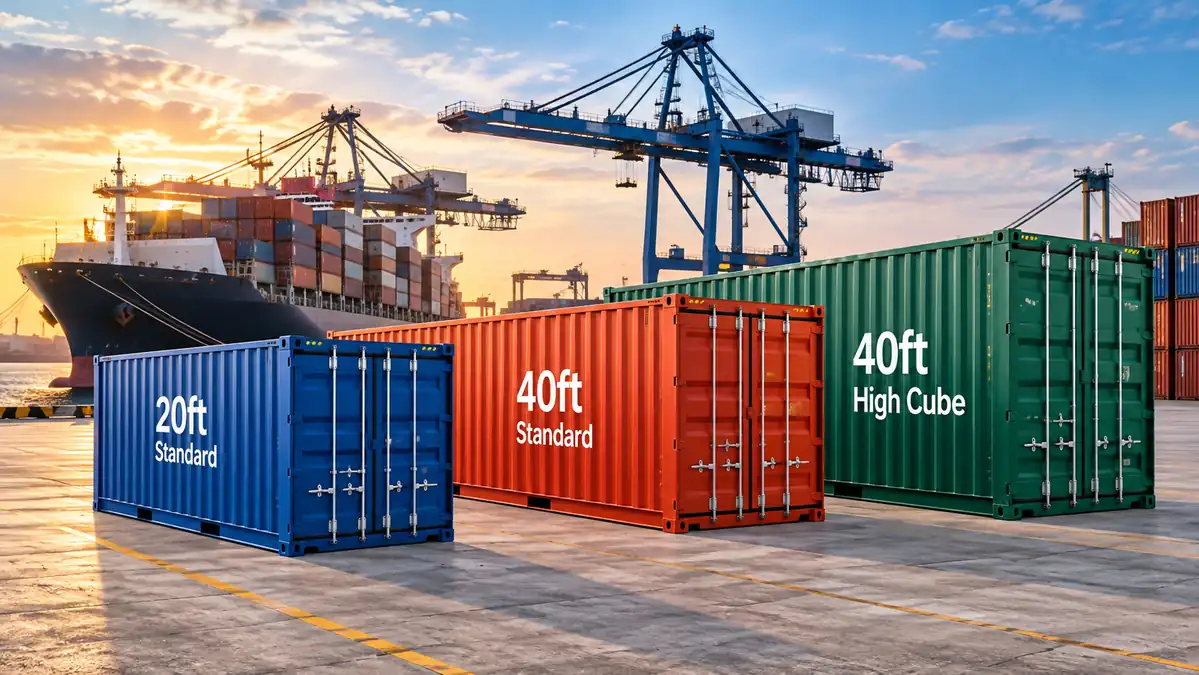
Choosing the right shipping container is an important step in planning an international shipment. The container you select affects how much cargo you can load, how efficiently you use available space, and whether your goods can be transported safely.
Standard dry containers are commonly available in 20-foot and 40-foot sizes, while 40-foot High Cube containers offer additional internal height. Other specialized containers are designed for refrigerated cargo, oversized machinery, and goods that require top or side loading.
In this guide, Beta Cargo explains the main shipping container sizes, their approximate dimensions and capacities, the differences between container types, and the factors to consider when selecting equipment for your shipment.
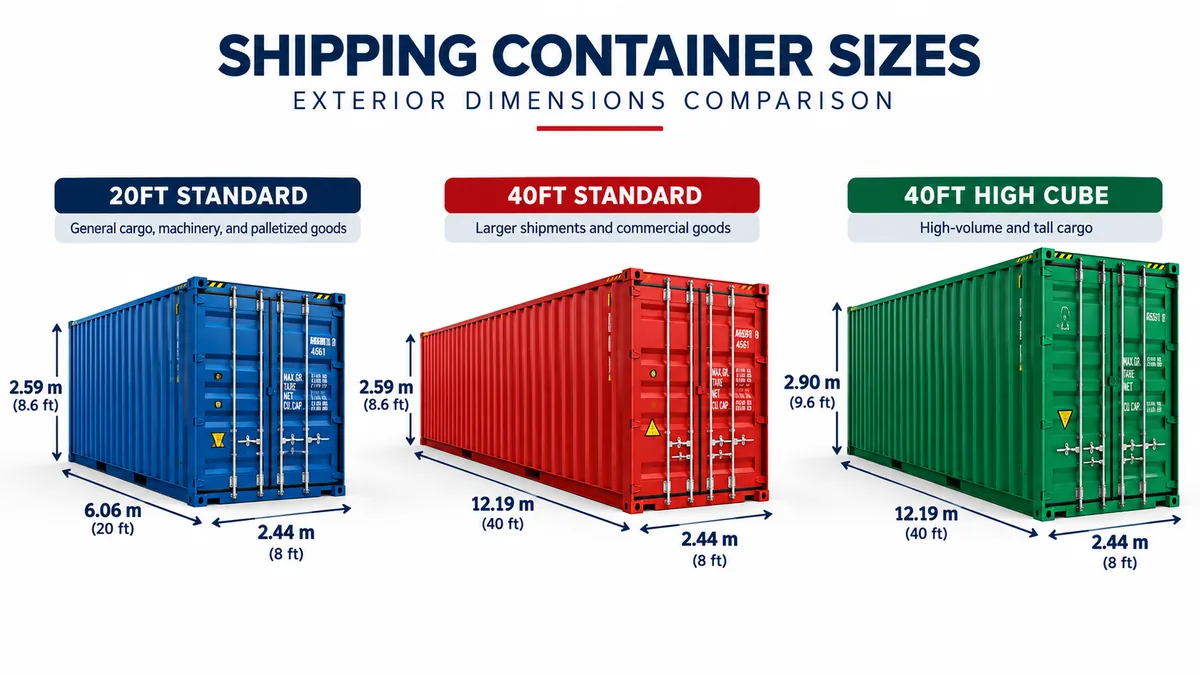
The table below compares four common container sizes. Measurements represent a published equipment example rather than universal specifications.
|
Container type |
Approx. internal dimensions (L × W × H) |
Internal volume |
|
20ft Standard |
5.90 × 2.35 × 2.40 m |
33.2 m³ |
|
40ft Standard |
12.03 × 2.35 × 2.40 m |
67.7 m³ |
|
40ft High Cube |
12.03 × 2.35 × 2.70 m |
76.3 m³ |
The 40ft High Cube container has approximately 8.6 m³ more internal volume than the standard 40ft container in this example. That additional space can be useful for bulky, relatively lightweight cargo.
Important: Internal volume is not the same as usable loading capacity. Packaging, pallets, cargo shape, door openings, weight limits, and loading arrangements all affect how much freight fits in practice.
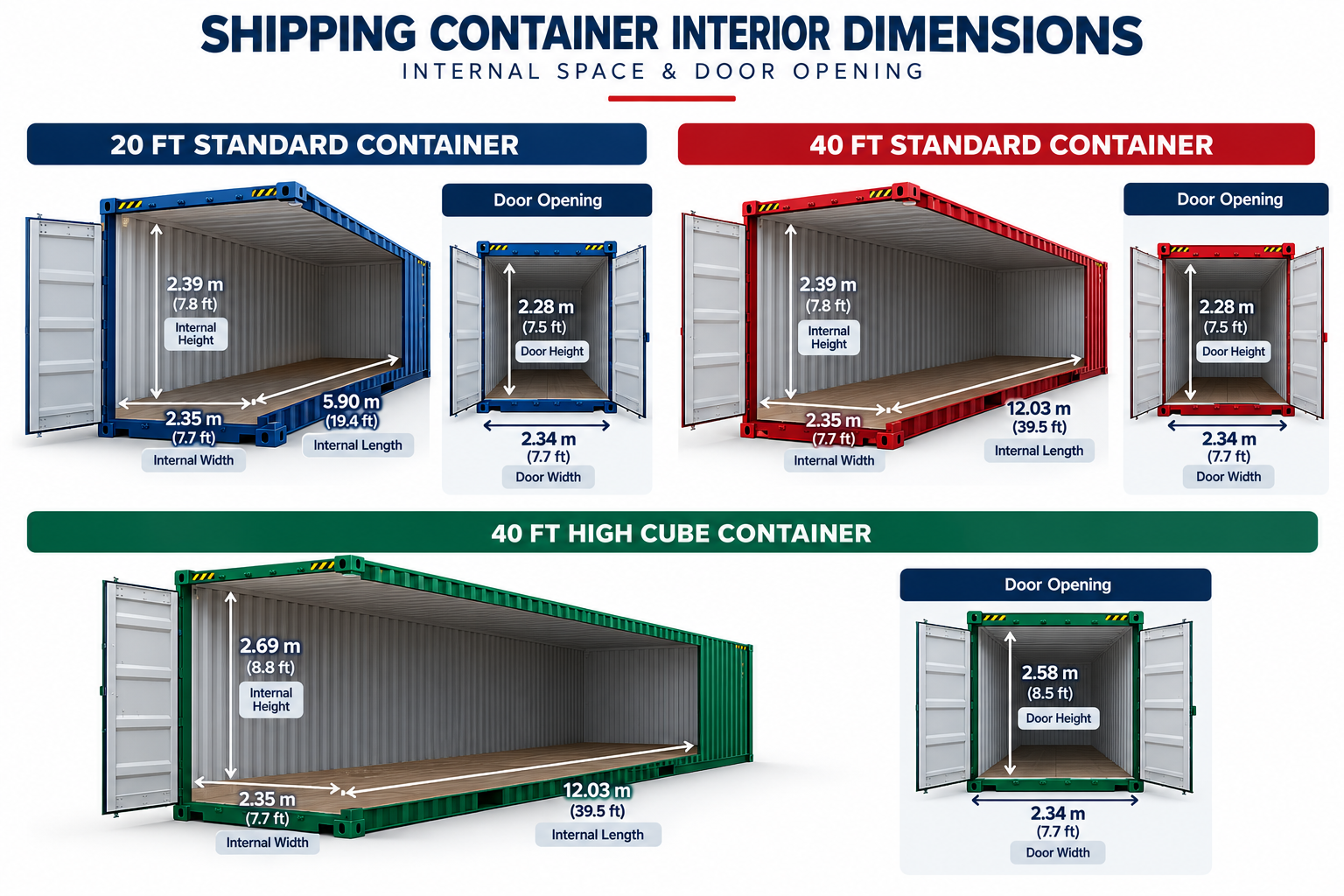
Compare the internal dimensions and door openings of standard and High Cube shipping containers.
Copy
The 20ft container is a practical option for many compact shipments and relatively dense cargo, provided the shipment stays within its weight limits.
Common uses
A 40ft standard container offers roughly twice the internal volume of a 20ft container, making it suitable for larger shipments of general cargo.
Common uses
High Cube containers have greater external and internal height than standard-height containers of the same nominal length. The extra space can help accommodate tall or bulky goods.
Common uses
Container types and their intended uses are documented in carrier equipment guides. Availability varies by location and route.
Standard dry containers are not suitable for every shipment. Specialized equipment may be required depending on the cargo’s temperature, dimensions, loading method, and handling needs.
|
Container type |
Main feature | Typical applications |
|---|---|---|
|
Reefer container |
Temperature-controlled transport |
Perishable goods and temperature-sensitive cargo |
|
Open Top |
Removable or open roof arrangement, depending on design |
Cargo loaded from above, including certain tall items |
|
Flat Rack |
Open sides or end structures designed for specific cargo |
Oversized machinery and project cargo |
|
Tank Container |
Tank system within a transport frame |
Suitable bulk liquids or gases, subject to equipment and regulatory requirements |
| Hardtop | Removable or movable roof design, depending on model |
Cargo requiring top loading or extra loading clearance |
How to choose: Start with the cargo itself. If it needs temperature control, evaluate a reefer. If it cannot pass through standard doors or requires crane loading, investigate open-top or flat-rack equipment. Confirm suitability with the carrier before booking.
The right choice depends on the shipment’s dimensions, weight, and loading requirements, not simply the nominal container length.
|
Comparison |
20ft Standard | 40ft Standard | 40ft High Cube |
|---|---|---|---|
|
Approx. internal volume |
33.2 m³ | 67.7 m³ |
76.3 m³ |
|
Relative length |
Shortest | About twice the nominal length of a 20ft |
Same nominal length as 40ft |
|
Internal height |
About 2.40 m | About 2.40 m |
About 2.70 m |
|
Potential advantage |
Compact equipment for dense cargo | More space for general cargo |
Extra height and volume |
| Key consideration | Weight limits and loading efficiency | Whether the cargo uses the available space efficiently |
Door clearance, cargo height, and route restrictions |
A larger container is not always the better option. Dense cargo may reach the permitted weight before the container is full, while bulky cargo may run out of space before reaching the weight limit.
Three weight terms are particularly important when comparing shipping containers.
Tare weight: The weight of the empty container.
Maximum gross weight: The maximum permitted combined weight of the container and its cargo, according to its rating and applicable transport limits.
Maximum payload: The maximum cargo weight permitted for that container, subject to the equipment rating and applicable restrictions.
| Container example | Tare weight | Maximum gross weight | Maximum payload |
|---|---|---|---|
|
20ft Standard |
2,350 kg | 30,480 kg |
28,130 kg |
|
40ft Standard |
3,750 kg | 32,500 kg |
28,750 kg |
|
40ft High Cube |
3,900 kg | 32,500 kg |
28,600 kg |
These figures are examples from Hapag-Lloyd equipment specifications, not guaranteed limits for every container.
Actual loading limits may be lower because of road, rail, port, or country-specific weight restrictions. Always check the assigned container’s rating and the permitted gross weight for the complete transport journey.
Follow these steps before requesting a freight quote.
Measure your cargo. Record the length, width, height, and number of packages or pallets.
Calculate the total volume. Estimate the shipment’s total cubic metres (m³), including the relevant packaging and loading arrangement.
Calculate the total weight. Include packaging, pallets, and any other cargo-related weight.
Check the door openings. A shipment may fit inside the container but still be too large to pass through its doors.
Consider special requirements. Determine whether the goods need temperature control, top loading, special securing, or other equipment.
Confirm the route and equipment. Ask your freight forwarder to verify container availability, carrier specifications, transport restrictions, and the final quote.
The most common dry container options include 20ft and 40ft standard containers, along with 40ft High Cube containers. 45ft High Cube equipment is also available on some routes.
A typical published 20ft standard container has an internal volume of approximately 33.2 m³. The amount of cargo that can actually be loaded will depend on its shape, packaging, arrangement, and weight.
A 40ft High Cube is taller and offers more internal volume than a standard-height 40ft container. The published example used in this guide has approximately 76.3 m³ of internal volume compared with 67.7 m³ for the standard 40ft container.
No. A 40ft container offers more volume, but the best option depends on cargo weight, shipment dimensions, equipment availability, and the total transport cost.
A reefer container may be suitable for temperature-sensitive goods. The required temperature range, ventilation, cargo compatibility, and operating requirements must be confirmed before shipment.
Provide your freight forwarder with the cargo dimensions, total weight, packaging details, origin, destination, and any special handling requirements. These details help determine suitable equipment and obtain an accurate quotation.
Selecting the right shipping container can help improve loading efficiency and support a smoother shipping process. The best option depends on your cargo, destination, weight, dimensions, and transport requirements.
Planning an international shipment? Contact Beta Cargo to discuss your cargo details and request a shipping quotation.
Sea Freight Services Beta Cargo provides sea freight solutions for businesses shipping goods internationally. We support Full Container Load (FCL),
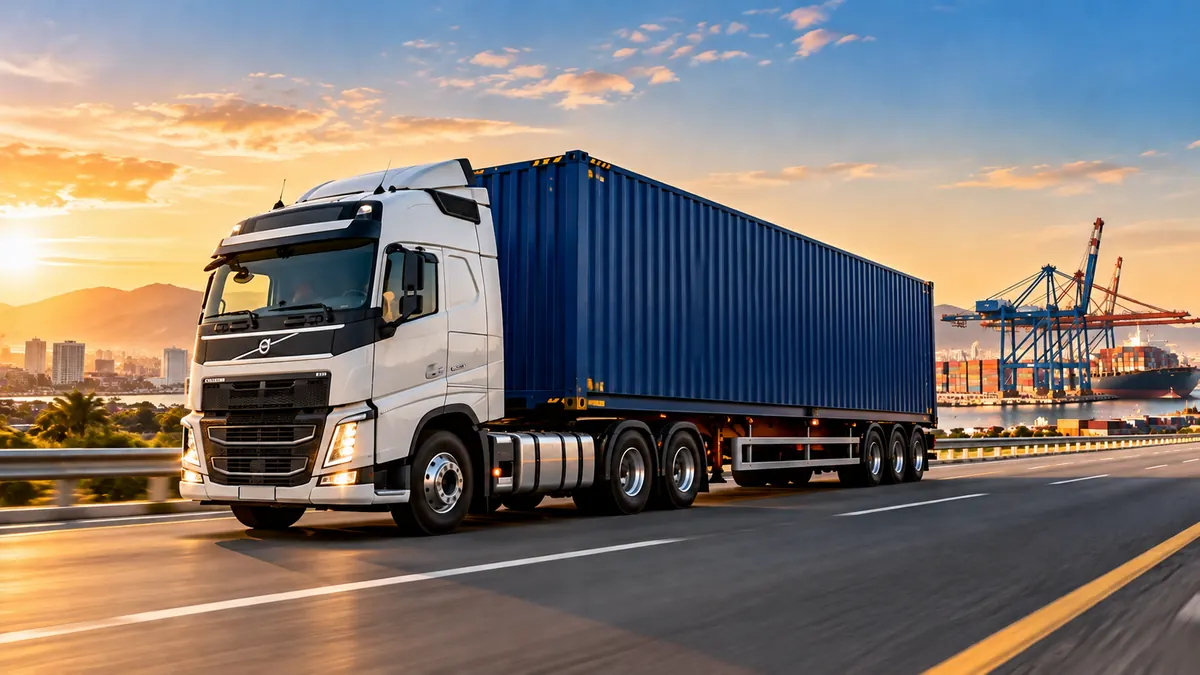
Land Freight Services Across the Gulf Region Beta Cargo provides land freight services from Egypt to the Gulf Cooperation Council
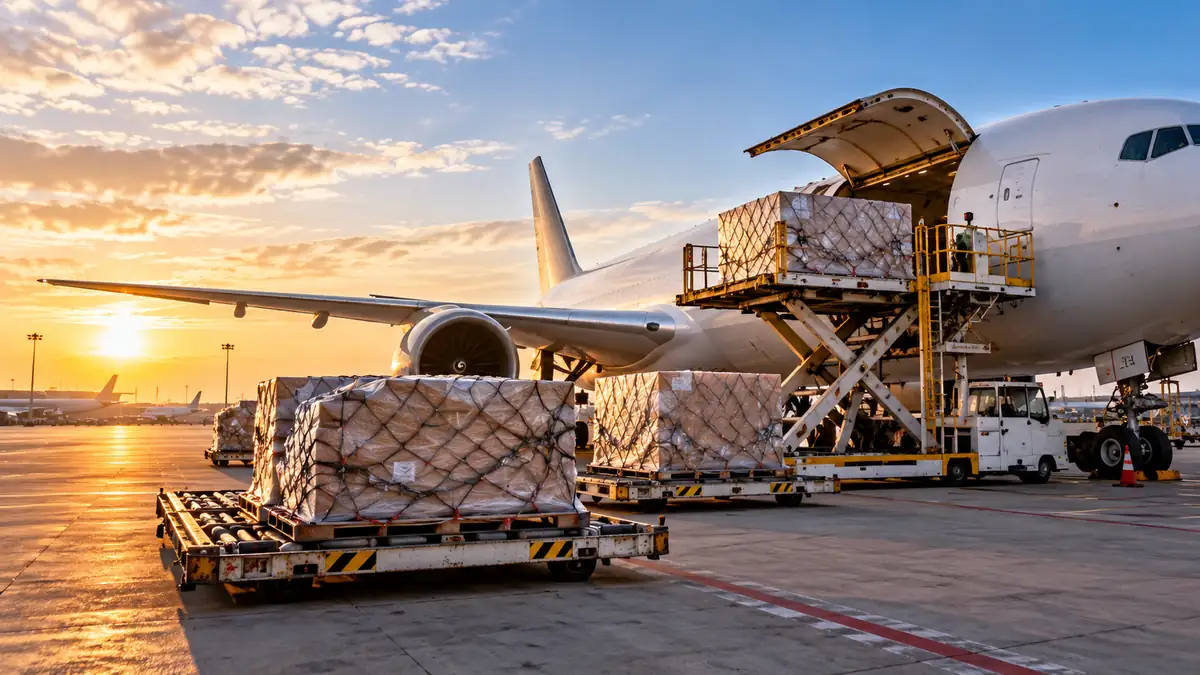
Air Freight Services Beta Cargo offers international air freight solutions for businesses that need to transport goods by air. Air

